
Standard Audit File for Tax (SAF-T)
Simplify your tax audits with SAF-T. Ensure your financial data is extracted, mapped, and delivered accurately according to local tax authority requirements.
What is the Standard Audit File for Tax?
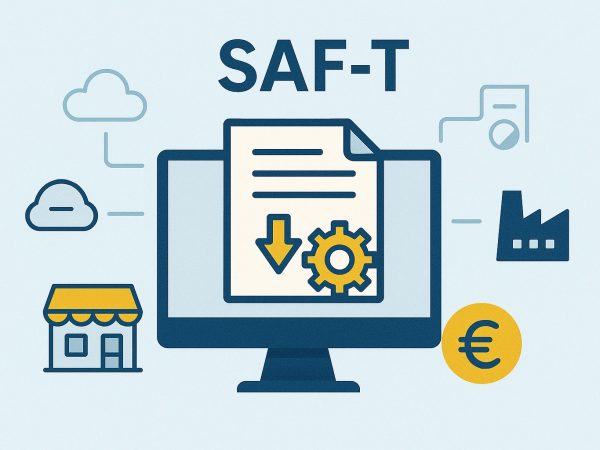
SAF-T is an international standard for the electronic exchange of reliable accounting data between tax authorities and businesses. Originally developed by the OECD, it helps governments perform faster, more efficient tax audits while standardizing the way companies report their financial records.
Comprehensive SAF-T Solutions
From data extraction to submission, we cover every aspect of your SAF-T compliance.
Data Extraction
Securely pull relevant financial data from your existing ERP and accounting systems without manual intervention.
Format Mapping & Conversion
Automatically convert your raw data into the correct XML structure required by the specific country's SAF-T schema.
Audit Trail Management
Maintain comprehensive, tamper-proof logs of all exported data to ensure transparency during tax inspections.
Multi-Jurisdiction Support
Handle country-specific versions of SAF-T effortlessly, whether you operate in Portugal, France, Norway, or beyond.
How SAF-T Integration Works
From system analysis to final submission in four simple steps.
System Analysis
We analyze your ERP structure to identify where the required financial data is stored.
Data Mapping
We map your specific chart of accounts and documents to the official SAF-T XML schema.
Validation
The generated file is pre-validated against strict tax authority rules to prevent errors.
Generation & Submission
The final XML file is generated and securely submitted to the tax authorities upon request.
Jurisdictions We Support
Your Trusted SAF-T Partner
Compliance Assured
Our solutions are continuously updated to meet the latest amendments in local SAF-T legislation.
Seamless ERP Integration
Whether you use SAP, Microsoft Dynamics, or custom software, our tools integrate without disruption.
Expert Support
Our team of tax and IT experts is available to guide you through the entire audit process.
Frequently Asked Questions
Answers to the most common questions about SAF-T compliance.
Yes, SAF-T is mandatory in several countries across Europe. Tax authorities can request a SAF-T file at any time during an audit, and businesses must be able to generate it quickly and accurately.
SAF-T files are generated in XML format. The structure and schema of the XML file are defined by the specific country's tax authority, based on the OECD's standard framework.
Typically, SAF-T files are submitted on-demand during a tax audit. However, some countries are moving towards periodic, automated submissions (e.g., monthly or quarterly) as part of their real-time reporting mandates.
No, SAF-T is an audit file that provides a comprehensive view of your accounting data. It does not replace standard VAT returns, but rather supports the tax authorities in verifying the accuracy of your returns.
Ready for SAF-T Compliance?
Contact us today to ensure your systems can generate accurate SAF-T files for any tax audit.